God is all-powerful. He does whatever He pleases in heaven and on earth, and no one can question Him or stay His hand. As the prophet Daniel declared: “All the inhabitants of the earth are reputed as nothing; He does according to His will in the army of heaven and among the inhabitants of the earth. No one can restrain His hand or say to Him, ‘What have You done?’” (Daniel 4:35)
His will shall stand, and His purposes cannot be thwarted.
In the previous part we saw God’s sovereignty displayed in His conversation with Moses. The same truth appears even more clearly in the confrontation with Pharaoh. God commanded Moses to perform signs and wonders so that Pharaoh might let the people go. Yet even before Moses returned to Egypt, the Lord said:
“When you go back to Egypt, see that you do all those wonders before Pharaoh which I have put in your hand. But I will harden his heart, so that he will not let the people go.” (Exodus 4:21)
This is a sobering reality. God sent Moses with mighty signs and plagues so Pharaoh would be without excuse, yet He also hardened Pharaoh’s heart so he would not let the people go. Even after the magicians confessed, “This is the finger of God,” Pharaoh’s heart remained hard, just as the Lord had said.
Why did God harden Pharaoh’s heart? The Lord Himself gives the answer:
“I will harden Pharaoh’s heart… and I will gain honor over Pharaoh and over all his army, that the Egyptians may know that I am the Lord.” (Exodus 14:4)
And again in Romans 9:17-18:
“For this very purpose I have raised you up, that I may show My power in you, and that My name may be declared in all the earth. Therefore He has mercy on whom He wills, and whom He wills He hardens.”
This truth is difficult for many to accept, but it is clearly taught throughout the whole Bible. God is absolutely sovereign. He shows mercy on whom He wills, and He hardens whom He wills.
Many will ask, “If God hardens hearts, then why does He still find fault?” The Apostle Paul gives the only right answer:
“But who are you, O man, to answer back to God? Will what is molded say to its molder, “Why have you made me like this?” Has the potter no right over the clay, to make out of the same lump one vessel for honorable use and another for dishonorable use? What if God, desiring to show his wrath and to make known his power, has endured with much patience vessels of wrath prepared for destruction, in order to make known the riches of his glory for vessels of mercy, which he has prepared beforehand for glory” (Romans 9:20-23)
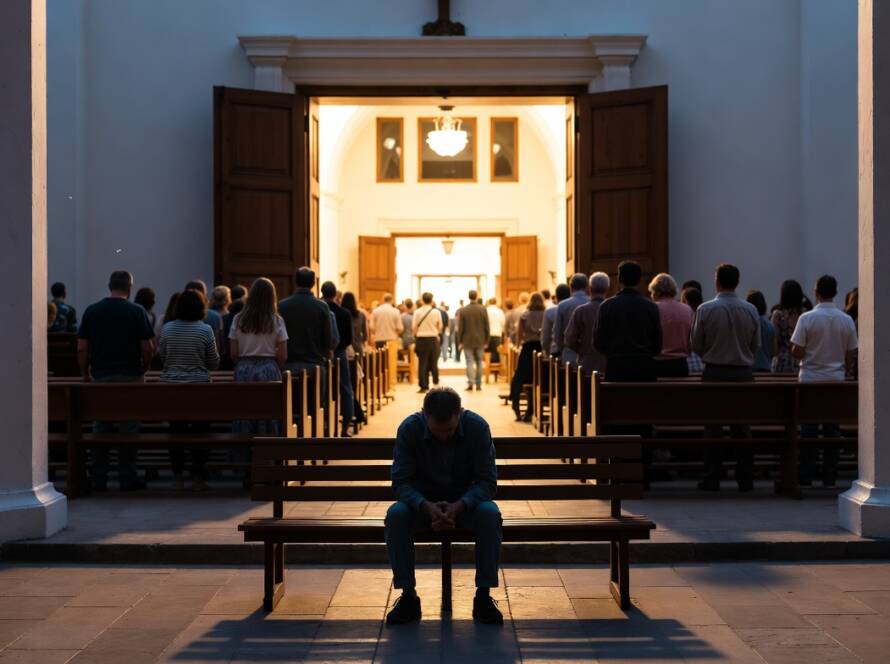
We must humble ourselves before this great truth. God resists the proud but gives grace to the humble (James 4:6).
The Puritan Stephen Charnock wrote:
“God’s sovereignty is the brightest jewel in the crown of His glory. He rules over all things with absolute authority, doing according to His will in heaven and on earth.”
When we rightly understand the sovereignty of God, we are driven to our knees in awe, humility, and worship. The inhabitants of the earth are counted as nothing before Him (Daniel 4:35). He is God — and we are not.